How Auto Repair Shops Can Speed Up Bay Turnover and Key Hook Tracking
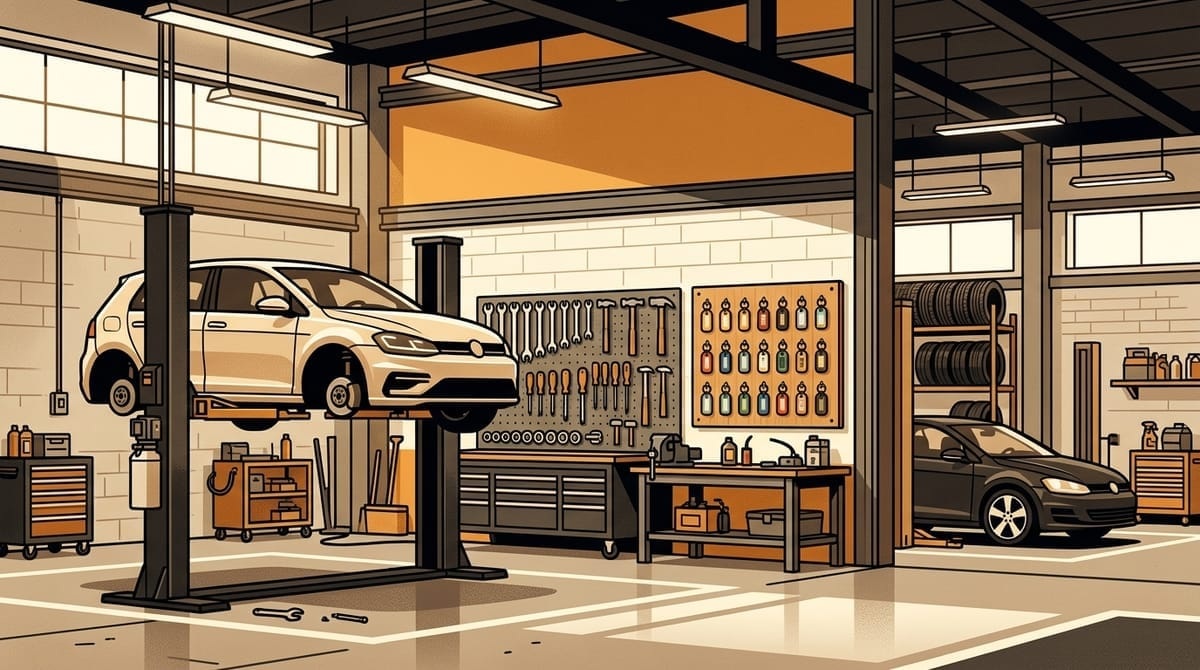
In an auto repair shop, your most expensive asset is your floor space. A finished vehicle sitting in a service bay because the customer has not picked it up actively blocks your next billable job. Accelerating your shop’s revenue requires optimizing your workflow to clear service bays as soon as the work is done.
Every day a completed vehicle sits idle on your lot or in a bay represents lost shop capacity. Two specific bottlenecks typically cause these pickup delays:
- Manual phone tag: Calling a customer to report a completed service often leads to missed calls and back-and-forth voicemails. The vehicle stays parked on your lot while the message sits unread.
- Key search time: When the customer finally arrives, front-counter staff waste minutes searching through key boxes, drawers, or desk piles to locate the vehicle’s keys and parking spot code.
Table of Contents
- The Cost of Idle Service Bays
- Implementing a Key Hook Grid System
- Automating the Ready Notification Loop
- Designing a Secure Handoff Protocol
- Frequently Asked Questions
The Cost of Idle Service Bays
Idle service bays block garage capacity, delay incoming repair tickets, and tie up business cash flow in unpaid invoices.
When a mechanic finishes repairing a vehicle, the service bay must be cleared immediately to allow the next vehicle in. If the vehicle sits in the bay for hours while staff try to reach the owner, that bay generates zero revenue.
For example, if your shop’s average bay generates $150 per hour in labor revenue, a bay blocked for just two hours a day due to slow customer pickup costs your business $300 daily. Over a standard 5-day week, this adds up to $1,500 in lost potential revenue per bay. Multiply this by three or four bays, and the cost of slow turnover becomes a significant drag on monthly margins. Keeping bays open requires moving completed vehicles to the lot immediately and notifying the client instantly. For a deeper look at physical tracking methodologies, see our guide on what is shelf tracking.
Implementing a Key Hook Grid System
A key hook grid system assigns a unique, reusable slot ID to every set of keys and vehicle location, eliminating search times at checkout.
In a busy storefront, keys are often tossed into drawer bins, hung on random pegs, or left on desks with paper tags. When a customer returns to collect their vehicle, finding the keys is a slow search.
Setting up a physical grid coordinate system solves this friction. First, number every hook in your key cabinet (e.g., Hooks 1–50). Second, map your parking lot into simple zones (e.g., Row A, Row B). When a vehicle undergoes intake, write its active coordinate parameters directly onto the service ticket.
Here is how a structured workflow tracks assets at any given moment:
| Vehicle Make & Model | Key Hook ID | Lot Spot Coordinate | Current Status |
|---|---|---|---|
| Ford F-150 (Silver) | Hook 12 | Row B, Spot 4 | Ready (Ready to collect) |
| Honda Civic (Black) | Hook 15 | Row C, Spot 1 | Bench (Undergoing service) |
| Toyota RAV4 (Blue) | Hook 08 | Row A, Spot 3 | Collected (Slot now recycled) |
Once the ticket is marked as completed or collected, the key hook and lot spot coordinates instantly become vacant, ready to be reassigned to the next incoming vehicle.
Automating the Ready Notification Loop
Automating ready notifications via transactional text messages reduces vehicle pickup delays and lot backlogs by reaching customers instantly.
Traditional customer communication in auto shops relies on phone calls. Technicians or service writers spend hours dialing numbers and leaving voicemails, which customers often ignore or fail to check for hours. Text messages solve this bottleneck. Over 90% of text messages are read within three minutes, driving much faster collection responses compared to voice messages.
When a technician updates the vehicle’s status to ready on the shop dashboard, the system immediately sends a text alert to the customer’s phone. This notification includes your garage address, the secure pickup details, and instructions to reply STOP to opt out.
To maintain carrier compliance and prevent messages from being blocked as spam:
- Verbal Intake Consent: Ask the customer for verbal consent to receive updates during check-in, and log it on the intake form.
- Disclaimer Info: Ensure your printed work order receipt contains a visible text disclosure.
- No Promotional Messages: Only send transactional status updates regarding the active service ticket. Never send marketing messages or sales pitches.
Designing a Secure Handoff Protocol
A secure handoff protocol uses a digital pickup PIN to verify customer identity at the counter, preventing unauthorized vehicle retrievals.
In busy mechanic shops, staff handoff keys to whoever asks for the vehicle, which poses a serious security risk. A secure handoff protocol uses a digital validation code to verify ownership before keys leave the cabinet.
When the vehicle’s status is changed to ready and the SMS is dispatched, the system generates a unique, single-use 4-digit pickup PIN sent directly to the customer. When the customer arrives at the counter, the service writer requests this PIN. Checking this PIN ensures that:
- The person collecting the keys is authorized by the vehicle owner.
- The service writer immediately retrieves the correct keys from the key cabinet using the mapped Hook ID.
- The transaction is completed securely, and marking the ticket as collected automatically releases the lot spot and key hook for the next vehicle.
Frequently Asked Questions
Can we use this alongside our existing garage POS system?
Yes. Shelvdon is designed as a standalone service order manager that complements your existing cash register or point-of-sale system. You can log your offline POS invoice number or work order ID in Shelvdon’s ticket notes, keeping your service bay tracking and client notifications separate from your billing tools.
How does automated texting help clear our bays and parking spaces?
Automated texts reach customers immediately on their mobile devices, whereas phone calls often go straight to voicemail. Because over 90% of text messages are read within minutes, customers arrange collection much faster, significantly reducing the amount of time completed vehicles sit in active work zones.
What happens if a customer replies to the pickup text?
Customer replies are delivered directly to your shop dashboard in real time. This allows your counter staff to answer questions, handle scheduling updates, or coordinate pickup logistics without having to answer phone calls.